
Family Safety

They said they would be home by eleven.It is midnight.

Safety Checkpoint tells the right person the moment a check-in is missed. Your teenager, your partner on a late shift, your mother living on her own.

No credit card required. Upgrade anytime. Cancel anytime.

Family Contexts

One Plan, Three Very Different Worries

A teenager, a night-shift commute and an elderly parent do not need the same check, but they need the same person to hear about it.

Children and teens

Practice runs late. Plans change in a group chat you are not in. The phone dies.

  • Home later than agreed, and no message
  • Dead battery or no signal
  • The route changed at the last minute
  • Nobody is sure who should call first

Recommended protocol

Location + Heartbeat

Set an arrival check for the places that matter, and a heartbeat for evenings with no fixed plan.

Working adults

A late train, a dinner that runs over, a drive home at one in the morning. The nights it matters least are the nights it could matter most.

  • Getting home long after everyone is asleep
  • Stuck somewhere with no way to warn anyone
  • Shifts that move without notice
  • Nobody knows what the plan was

Recommended protocol

Recurring Check-in

A recurring check-in that matches the working week, and an alert if the confirmation never comes.

Older relatives living independently

She calls every morning. One morning she does not. That silence is the signal, and it should reach you quickly.

  • The usual morning check does not happen
  • The phone is out of reach
  • Hours pass before anyone notices
  • No agreement on who goes round

Recommended protocol

Check-in + Heartbeat

A daily check-in with a heartbeat fallback, so a late breakfast does not become a false alarm.

Protocol Strategy

Three Ways to Check In, One per Routine

Built around how your family actually lives.

Routine check-ins

Best for structured schedules

  • Fixed confirmations for the school run, work, or the morning coffee.
  • Everyone knows what normal looks like.
  • Nothing happens unless a check-in is missed.
  • Suits older relatives and predictable commutes.

Flexible heartbeat

Best for variable days

  • Confirm you are fine at intervals, on days with no fixed plan.
  • Good for teens, travel days and shifting schedules.
  • Less rigid than a fixed time you will forget.
  • The alert fires only when the taps stop.

Arrival verification

Best for destination-based protection

Recommended
  • Set a destination and a time to be there by.
  • The alert fires only if they never arrive.
  • Made for school runs, activities and late evenings.
  • Works well when several people share the worry.
Setup

Set Up Your Family Check-ins in Four Steps

Half an hour once, then it runs on its own.

1

Decide who gets the call

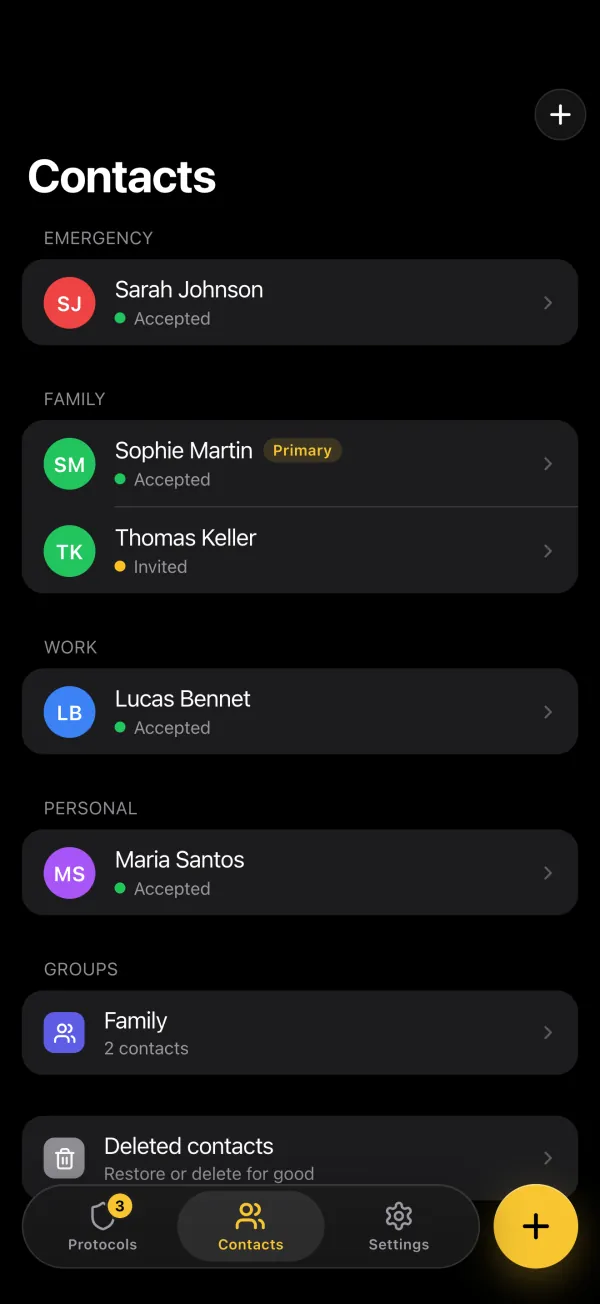
Choose who hears first, who follows up, and who goes round if nobody answers.

2

Write what they will need to know

One message per person, saying where they were going and what to do next. Your contacts read that, not a form.

3

Match the check to the routine, not the age

A fixed check-in for predictable days, a heartbeat for unpredictable ones, an arrival check for a specific place.

4

Test it once a month

Run one scenario so nobody is reading an alert for the first time during a real one.

Before You Call It Done

Four things worth confirming before you rely on it.

  • Two contacts for each person, never just one
  • Everyone knows who is called first
  • Each message actually says something useful
  • A monthly test is in the calendar

Frequently Asked Questions

Build Your Family Safety Net Before an Emergency

Set clear family roles now so escalation can run quickly and calmly if someone misses confirmation.

No credit card required. Upgrade anytime. Cancel anytime.