
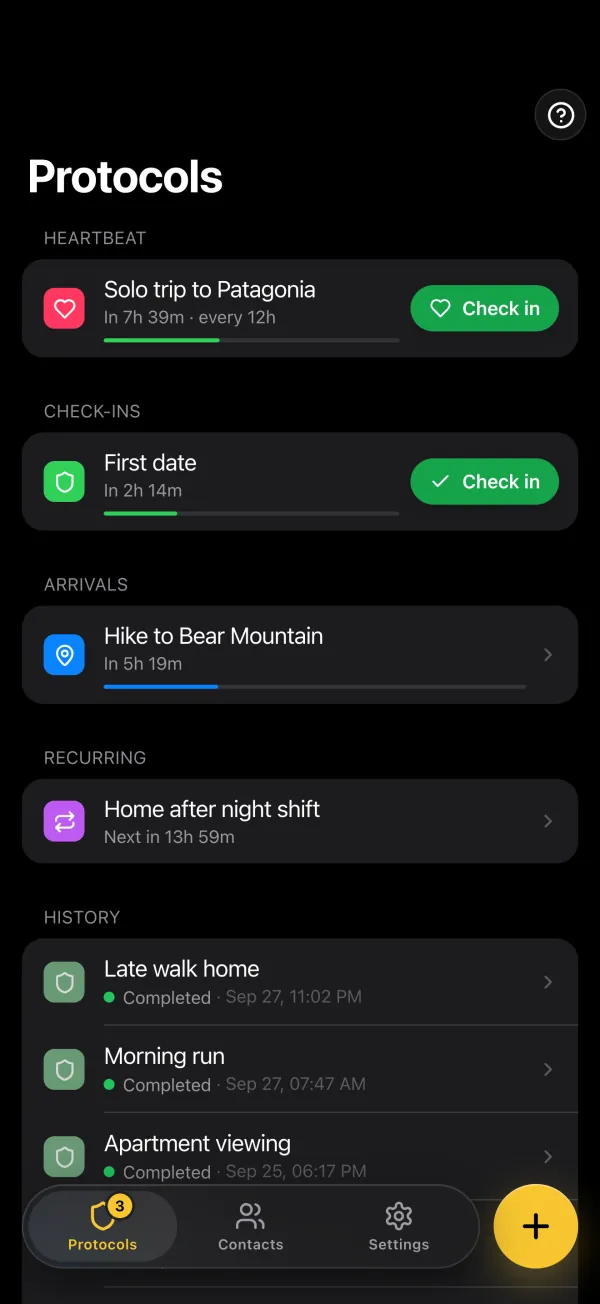
Night Safety

The last train was at 23:40.You were not on it.

If you do not confirm you got home, the people you chose hear about it, with your message and where you were headed.

No credit card required. Upgrade anytime. Cancel anytime.

Common Scenarios

Where Night Plans Can Break Down

Different night situations need different protocol timing, but all require one clear response plan.

Night commutes and planned returns

You leave work late, travel alone, and expect to arrive home at a known time.

  • Last transit options are limited
  • Long or isolated routes
  • Device battery uncertainty
  • Delayed arrival without clear signal

Recommended protocol

Check-in Protocol

Set a departure and an expected arrival. Miss the confirmation and your contacts receive your message.

Events with no fixed end time

Parties, concerts, and social nights often run later than planned, with changing routes and timing.

  • Schedule shifts unexpectedly
  • You move between multiple places
  • Communication becomes intermittent
  • No single predictable return time

Recommended protocol

Heartbeat Monitoring

Use regular heartbeat confirmations every 1-4 hours so escalation starts only if activity stops.

Getting home safely after midnight

Your priority is simple: if you are not home by a defined deadline, contacts should be alerted.

  • Late-night route changes
  • Rides canceled or unavailable
  • Unfamiliar areas after dark
  • Arrival uncertainty for family or roommates

Recommended protocol

Location Protocol

Set your home zone and deadline (for example 3:00 AM). If you are not there in time, alerts are sent.

Protocol Selection

Pick the Right Protection Mode for Tonight

Select the mode that matches how predictable your night schedule is.

Check-in Protocol

Best for planned returns

  • Configure one expected arrival window.
  • Send alerts only when confirmation is missed.
  • Keep escalation simple for night commutes.
  • Works well for predictable end times.

Heartbeat Monitoring

Best for flexible social nights

  • Confirm safety at regular intervals.
  • Reduce manual setup during unpredictable nights.
  • Escalate if check-ins stop unexpectedly.
  • Useful for long events with variable timing.

Location Protocol

Best for verifying safe arrival home

Recommended
  • Define a destination zone and deadline.
  • Trigger only if you do not arrive in time.
  • Ideal for post-event return safety.
  • Recommended for late-night home verification.
Setup

Set Up Your Night Safety Check-in in Four Steps

Set it once, test it, then forget about it until the night you need it.

1

Add trusted contacts first

Start with people who can respond quickly at night: close friends, partner, family, or roommate.

2

Write your message

Include clear context: where you were going, where you were last seen, and what contacts should do first.

3

Choose protocol and timing

Use check-in for planned returns, heartbeat for flexible nights, or location for home-arrival verification.

4

Activate before heading out

Start it before you leave, so it is already running if you cannot reach anyone.

Night Safety Checklist

Worth confirming before you rely on it.

  • At least two trusted contacts configured
  • Home zone and arrival deadline reviewed
  • Your message updated for tonight
  • Protocol tested once before relying on it

Frequently Asked Questions

Don't Wait for a Bad Night to Set Up Protection

Set your protocol in minutes and let escalation run automatically if a check-in or arrival confirmation is missed.

No credit card required. Upgrade anytime. Cancel anytime.